Plant with confidence: Stine® agronomists offer top tips for spring season
April 2026Many factors come into play when deciding whether it’s time to hit the field this spring. Crop insurance dates, soil conditions, equipment readiness and the extended weather forecast should all be carefully considered before the planter rolls.
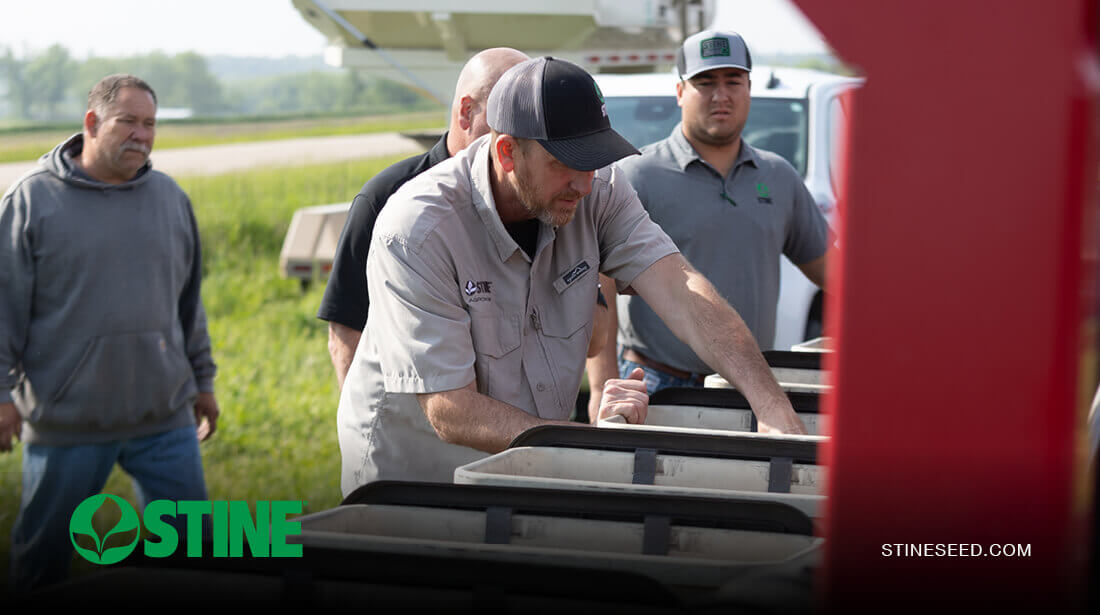
Stine® agronomists and sales reps have been working side by side with growers to prepare for this moment, reinforcing the importance of sticking to your original planting plan as closely as possible. If weather or unexpected equipment issues force you to adjust, lean on your Stine seed experts for guidance.
To help growers navigate the busy season ahead with confidence, Stine agronomists share their top tips for spring planting.
Tony Lenz, technical agronomist
Southeastern South Dakota and northern Nebraska
“The recent cool and wet weather may shift some perspectives on early planting, but success still comes down to paying close attention to the right factors. A good rule of thumb is to closely monitor soil temperatures, watch the extended forecast, evaluate field drainage, know your state’s crop insurance dates, and understand how each corn hybrid and soybean variety reacts differently to frost. All of these play an important role in achieving strong emergence and early-season growth. I recommend waiting until soil temperatures have reached at least 50°F for several days before planting, checking soil temperatures at a 4-inch depth with each probe, and reviewing the 10- to 14-day forecast to avoid cold snaps or heavy moisture. If frost is a concern, soybeans may be the better crop to plant first, because even with uneven emergence or a reduction in final population stands, yields can still be maximized versus corn. And soybean seedlings typically have better cold tolerance, especially with the seed treatments we have today.”
Susan Hart, field agronomist
Western Minnesota, North Dakota and northern South Dakota
“One thing I like to focus on with my growers is the importance of monitoring seed depth. In the rush to get everything planted, it is important to check behind the planter to ensure it is doing the job it is supposed to. The ideal planting depth for corn is 2 inches. It is important when first setting the planter to check every row unit and then periodically check it throughout the day, especially when changing fields and/or soil conditions. Uniform emergence of corn is so critical; small amounts of variance can make a big impact on final yield. Corn planted at less than 1.5 inches is at a significantly greater risk for early drought stress and inconsistent furrow moisture, causing uneven development. Early drought conditions can really make planting errors show. On the contrary, in wet conditions, shallow-planted corn has a poorer root base, causing numerous in-season problems.”
Ian Matzenbacher, field agronomist
Illinois
“Make sure the soil temp is at minimum above 50°F before even thinking about planting. If your area’s planting timing this year is earlier than normal, I would think about getting seed treatment on your earlier planted acres. If you do plant a little early, I would also bump up your planting population a little bit. Always double check your planting depth. Sometimes the conditions make you plant shallower or deeper than you think. After planting, check how many days it took for the plants to start to emerge and use that information to give you a better idea of what to do the following year.”
Jacob Foote, field agronomist
Indiana, Michigan, Ohio and Pennsylvania
“A successful start to planting season begins long before the planter hits the field. Prioritizing that soils are fit for planting is critical. Planting into soils that are too wet can create compaction and sidewall smearing that impact root development all season long. Roots that are slower to develop are at a disadvantage throughout the year and, in many cases, are not able to handle the late-season stresses we typically see, as well as hybrids and varieties that are planted when soil conditions are right for planting. Take time to evaluate soil moisture and ensure good seedbed conditions before getting started. Proper planter setup and calibration are equally as important. Double check seeding depth, closing wheel performance and downforce to ensure consistent seed placement. Uniform emergence is one of the biggest contributors to maximize yield potential, so minimizing variability at planting should be a top priority. Plants that can emerge at roughly the same time will have less competition from neighboring plants and can become established earlier when crop development is crucial.”
Brett Gordon, technical agronomist
Arkansas, Oklahoma, Kansas, Missouri, Mississippi, Louisiana and Texas
“Have an up-to-date soil sample to ensure you get off to the right start with fertility. Start clean and stay clean is my top recommendation for early-season weed control. Have a good burndown program in place and utilize residual herbicides to keep your crop weed free. Don’t skip out on seed treatment. Often, we face cool, wet conditions in the early planting season; therefore, a good seed treatment is vital to ensure your crop can overcome these conditions.”
Daniel Greblunas, field agronomist
Nebraska and Kansas
“Stick to the plan. Spring is one of the seasons for a lot of farmers that can make them second-guess their decisions when planting. It is also very chaotic when the weather is right and everyone is in a hurry to get their seed in the ground. Sometimes these two factors make it easy to make emotional decisions. What I like to see is trying to stick to your plan. Whether you consulted your agronomist or sales rep, there is a reason they placed those products in those specific fields. After the seed is in the ground, there is no changing it. Even though weather may be adequate now, remember to check your 10-day projected forecast. Weather that could be damaging to that seed or that plant could be around the corner. Finally, never be afraid to get a second opinion. If you are questioning a decision, feel free to reach out to your local agronomist to get information about how these specific products may react.”
Erik Salm, field agronomist
Wisconsin
“Remember to focus on the soil temperature rather than just the calendar. The soil temperature at a 4-inch depth should be maintained at or above 50°F for several consecutive days before you plant corn. Make sure to check the temperature in the morning rather than the afternoon, as afternoon readings can be 5°F–8°F warmer, which may give you a misleading indication that it's time to plant.
“Take care to protect your seeds during the first 48–72 hours after planting. This period is when your seeds are most vulnerable, actively absorbing water. If soil temperatures drop sharply during this time, you risk imbibitional chilling injury, which is essentially cold shocking the seeds before they have a chance to grow. Before planting, check the 10- to 14-day weather forecast and ensure there are no cold rain events expected within two days of planting.
“Don't sacrifice planting depth for speed. While it may be tempting to plant shallower when soils are cool, I recommend maintaining a depth of 1.75 to 2 inches for corn. Shallow-planted seeds are more exposed to temperature fluctuations, which can lead to uneven emergence and, in wet years, rootless corn. Planting at a consistent depth ensures consistent emergence.”
Kayla Noble, technical agronomist
Eastern Iowa, Illinois, Minnesota and Wisconsin
“For corn, given the current transition out of an El Niño pattern, temperature and moisture conditions have been highly variable this spring, with similar trends expected over the next 10 days. Under this weather pattern, achieving fit soil conditions is more critical than planting early. Target soil temperatures of at least 50°F and rising prior to planting.
“Avoid planting into wet soils or “mudding in,” as this can lead to soil compaction and increase the risk of root diseases. Uniform emergence remains one of the most significant drivers of yield potential, so patience is key. Prioritize planting when soil conditions are favorable and maintain a consistent planting depth across the field to support even emergence.
“Soybeans tend to benefit more from earlier planting than corn, as increased node development contributes to higher yield potential. They are also more tolerant of variable conditions. Target optimal seeding rates based on geography (IA/IL: 125,000–140,000 seeds/acre; MN: 125,000–185,000 seeds/acre).
Soybeans have a strong ability to compensate through branching, allowing lower plant populations to still achieve competitive yields. As with corn, consistent planting depth is essential for uniform emergence. If early-season conditions delay planting, consider adjusting seeding rates accordingly and select varieties with strong tolerance to the specific stressors common in your area.”
For more spring planting tips, contact your local Stine sales rep or agronomist.