Stine® agronomy expands research efforts to address soybean gall midge
May 2026Stine® Seed Company’s agronomic research is unmatched, and we’re continually finding new ways to focus on the critical data that supports our products and helps growers make confident placement and in-field management decisions. Over the past few years, we’ve elevated the research conducted through our Product Development Plot (PDP) and research programs to the next level.
“Our testing network gives us valuable insights, from our PDPs to our research plots,” says Stine Technical Agronomist Tony Lenz. “The data helps us better understand the challenges farmers are facing, including soybean gall midge. Since it continues to be a concern, we’re expanding our research efforts to learn more and help address it.”
The rise of soybean gall midge
Soybean gall midge is a growing threat for farmers, especially as the yield-robbing pest expands its reach across the Midwest. It’s a relatively new insect in the U.S., having first been confirmed as a new species in 2019. Since then, it’s been found in parts of Nebraska, Iowa, Minnesota, Kansas, Missouri, South Dakota and North Dakota.
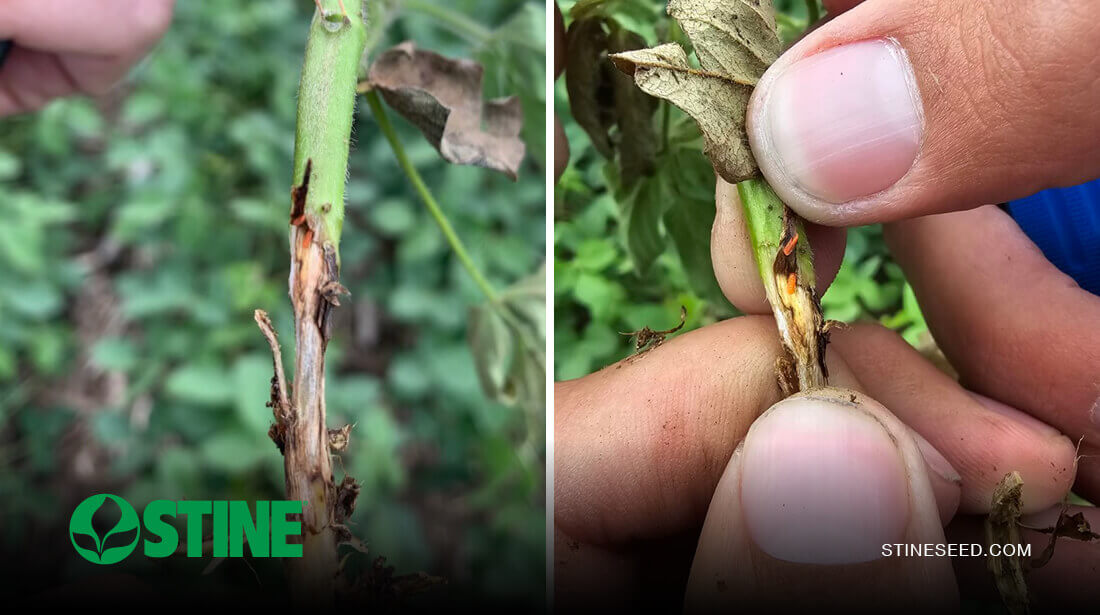
The pest overwinters in previous years’ soybean fields as larvae. In late spring, adults fly in, land on young plants to lay eggs and then the new larvae hatch to feed on stems, restricting the uptake of water and other essential nutrients. Because they typically feed along field edges, affected plants can be mistaken for issues caused by compaction or herbicide injury from an adjacent field.
It’s important for growers to do their due diligence when they see wilted or dead plants on the edges of fields. Stine agronomists recommend digging up the plant to split open the stem. If white or orange larvae are found feeding within the inner layers, growers should check the Soybean Gall Midge Alert Network tracking system to determine whether the pest has been reported in their area. Then, they should contact their local extension specialist to help confirm the diagnosis and report the finding if their county is not yet documented on the map.
The search for control
As soybean gall midge continues to spread and affect yields throughout the Midwest, Stine is working with industry partners to find new ways to control the pest. Currently, Stine is partnering with the University of Nebraska-Lincoln’s Institute of Agriculture and Natural Resources to research soybean lines that could potentially offer tolerance.
“Until now, there have been few strategies to manage and control soybean gall midge,” says Lenz. “According to research conducted by land-grant institutions funded by the North Central Soybean Research Program and Nebraska Soybean Board, there’s been some success with hilling, or cultivating fields, around the V2 stage, as well as delaying planting until later in the season, around late May. Other management options have included insecticides, though they have often yielded little to no results.”
Previous research conducted by the University of Nebraska-Lincoln found that some PI soybean varieties showed potential resistance to soybean gall midge. This struck a chord with Stine agronomists. As one of the leading soybean seed genetics suppliers in the industry, we have access to a wealth of potential lines that could offer similar resistance.
In 2025, Stine agronomists started testing 33 of our own varieties near Avoca, Iowa — a hotbed of soybean gall midge activity at the time.
“Last year, we did some visual observations of how the lines react to the heavy gall midge pressure,” notes Lenz. “This year, we’re working directly with the University of Nebraska-Lincoln to do a deeper dive into the research to see which products fare better against gall midge, including seeing how each variety is affected by feeding and lodging. We look forward to their expertise and support throughout the season as we share data and perspectives.”
This collaboration is designed to expand research and understanding of how commercially available soybean genetics respond to real-world gall midge pressure while also helping identify potential management tools for growers.
“Host plant resistance is one of the most important long-term tools for managing soybean gall midge,” says Justin McMechan, associate professor of entomology at the University of Nebraska-Lincoln’s Institute of Agriculture and Natural Resources. “While no commercial variety is currently considered fully resistant, identifying lines with reduced plant injury or lower larval abundance under heavy pressure could provide growers with protection and help reduce yield losses. This partnership with Stine and others is critical as they allow us to evaluate a broader range of commercially available soybean genetics that are directly available to farmers.”
As Stine agronomists and the University of Nebraska-Lincoln further their research this season, growers who suspect soybean gall midge in their fields can confirm its presence using the Soybean Gall Midge Alert Network tracking system. To learn more about the pest and soybean lines being tested for resistance, contact your local Stine sales rep.