Stine® soybeans + Victrato®: A new line of defense for red crown rot
October 2026At Stine® Seed Company, we’re always looking for ways to help our customers achieve top-end yields. That’s why, in 2026, our agronomy team tested the latest innovation in soybean seed treatments, pairing Syngenta’s Victrato® soybean seed treatment with Stine’s elite genetics on acres hit hard by red crown rot (RCR) the previous year. The combination delivered results where the disease struck again this season.
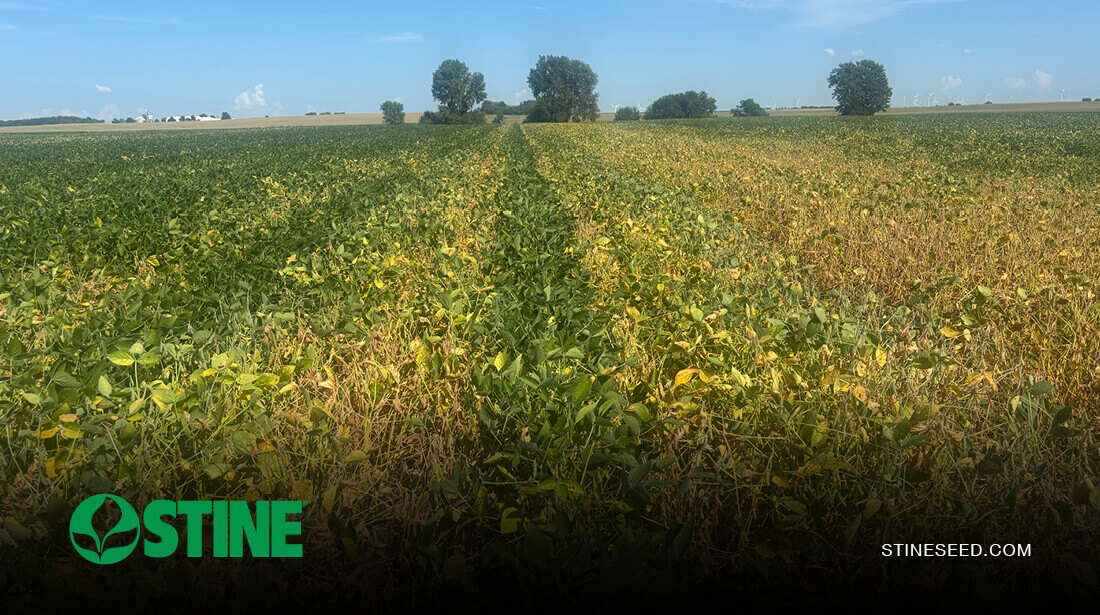
“For this field trial, we planted single-row trials in a field continuously grown soybeans on soybeans for 20 years,” says Tyler DuBay, Stine soybean technical agronomist. “After a severe red crown rot outbreak there last year, we saw strong disease pressure again this year, but we also saw really good results with Stine genetics combined with Victrato.”
The growing need for RCR protection
This particular field wasn’t the only one under pressure. Early-season moisture, followed by high temperatures and a history of RCR in some fields, set the stage for the disease to come back with a vengeance.
“It was pretty bad this year,” notes DuBay. “Some areas were really wet. We had a bunch of rain early, and then it got really hot. And some areas got it [RCR] early, while others got it moderately in the middle of the season. Once you have it, it’s everywhere.”
RCR’s ability to overwinter and spread rapidly, especially through water movement and in conditions with heavy moisture, is one reason why DuBay and the agronomy team are devoting significant time to studying the disease, along with genetic tolerances and seed treatments that can stand up to it.
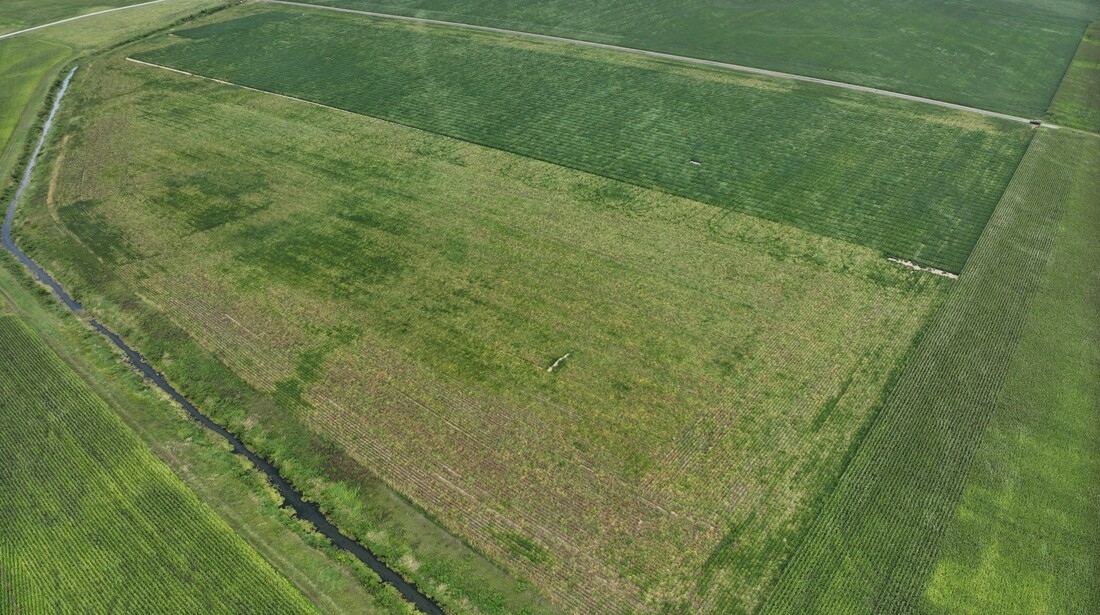
“In one Elite Yield Trial where RCR was present, we were able to distinguish genetic tolerances this year,” says DuBay. “Our hope is to continue to find these tolerances and seed treatments that work well so that growers can get ahead of it, because once you have it in your fields, it’s not going anywhere.”
RCR is often mistaken for sudden death syndrome (SDS), but DuBay cautions against making that determination from the road.
“It spreads through water, and it spreads a lot easier than SDS,” he says. “You need to look beyond the canopy, at the crowns and roots of the plant, to get a clearer picture.”
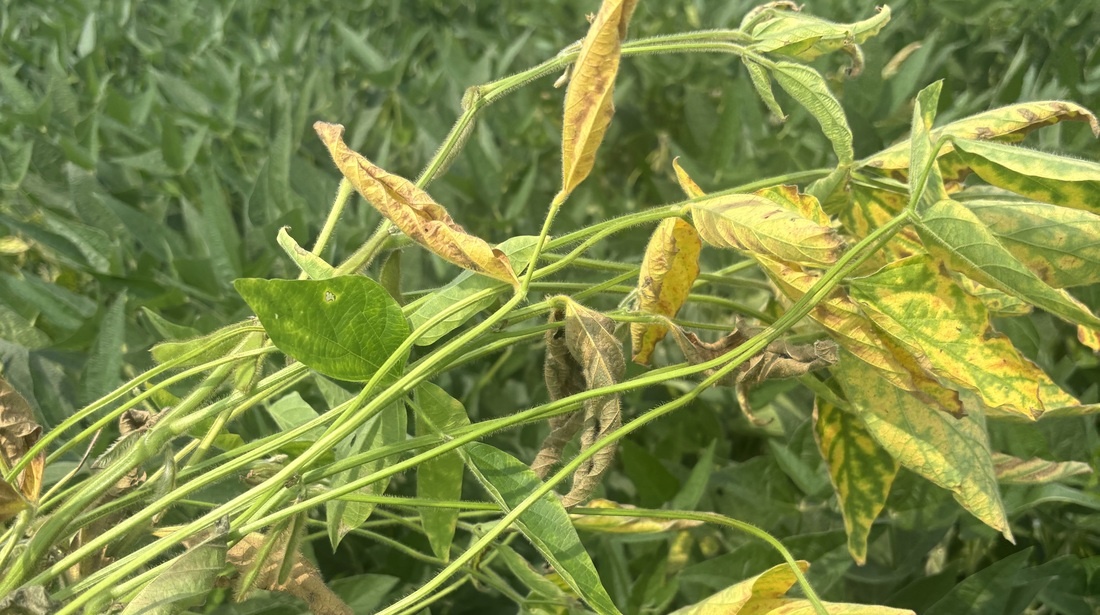
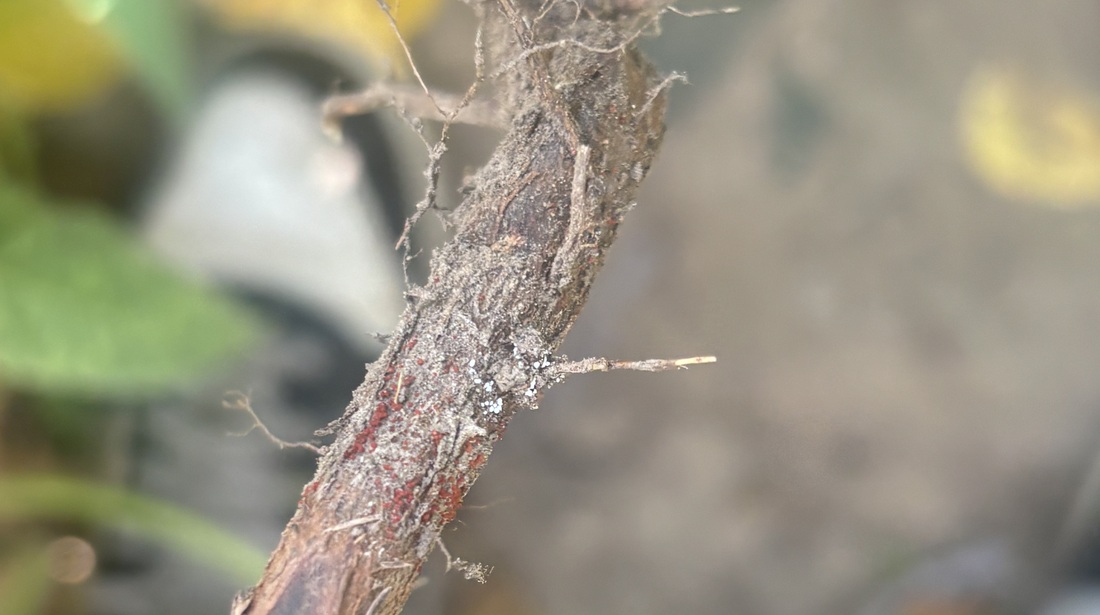
Like SDS, RCR can result in necrosis of the leaves, premature plant death and some bean shattering. However, if you get out and dig up the plant, the key difference you’ll notice is red coloring on the crown.
“You don’t have to slice the stem open to see the disease,” notes DuBay. “The top part of the plant may look like SDS, but when you look at the base of the crown and the root, you should see little red fungal spores present.”
According to the Crop Protection Network, RCR was first found in U.S. soybeans in North Carolina in 1972. It reached the Midwest in 2018, when it was confirmed in Illinois, and has since spread to several surrounding states — a growing problem that calls for more research and additional solutions.
The Stine + Victrato difference
Victrato soybean seed treatment received U.S. Environmental Protection Agency registration in November 2025 and is the first seed treatment labeled for RCR in soybeans. It’s currently available for use with Stine soybeans through our seed treatment network.
“In 2026, we tested Victrato at a few different locations in our Elite Yield Trials and Product Development Plot (PDP) program, but the field trial in Illinois gave us a true test of how Victrato stands up to the disease, as the field experienced heavy RCR pressure this year,” says DuBay.
DuBay notes that both treated and untreated soybeans were planted across the single-row trial.
“We planted Victrato-treated soybeans every four rows,” says DuBay. “I expected those rows to stand out with greener plants, and they did. The results were strong, and the treated soybeans were easy to identify.”
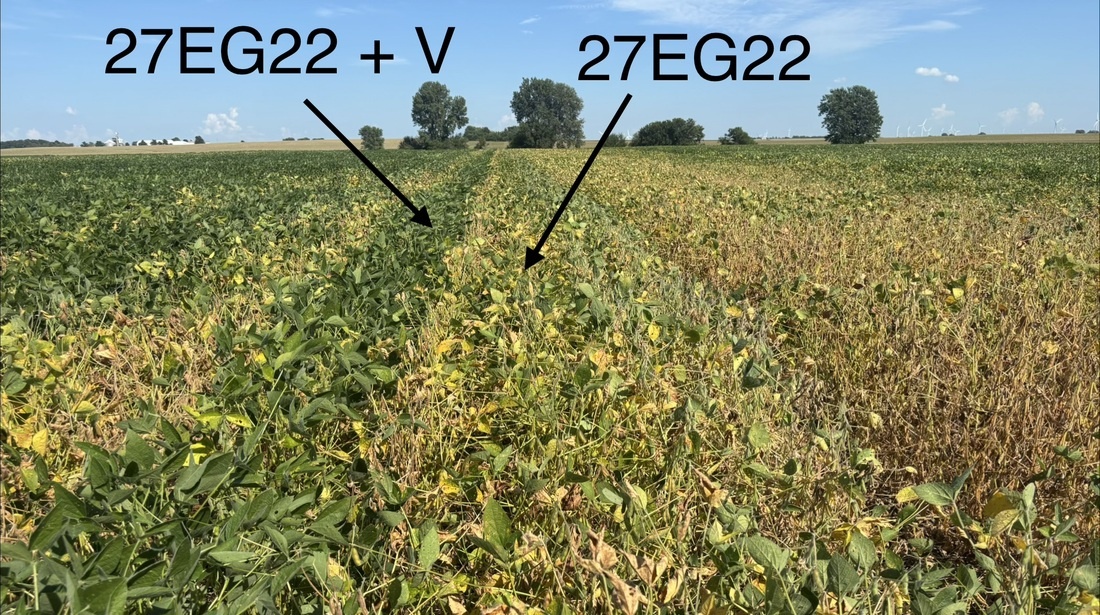
Maturities in the trial ranged from 2.4 to 3.8 relative maturity and were planted in 15-inch rows. The results were clear; Stine genetics paired with Victrato seed treatments were a strong combination.
“Victrato-treated plants stayed green longer and had better plant health all the way down and across the field,” he says.
In addition to the Illinois strip trial, DuBay expects more performance and yield data after harvest from this year’s PDPs, where the agronomy team is also testing Stine’s lineup of XP® seed treatments alongside Victrato. He also hopes the Elite Yield Trials will reveal more genetic tolerance to RCR, allowing Stine to include RCR ratings for its products in the future.
Beyond RCR, Victrato provides protection against multiple nematode species, including soybean cyst nematode (SCN), root knot, reniform, lance and lesion nematodes. It also delivers activity against SDS and offers early-season suppression of foliar diseases, such as frogeye leaf spot and Septoria brown spot.
Considerations before you invest in 2027
DuBay recommends growers consult their Stine sales representative and local agronomist before adding a seed treatment package to their seed purchase. Not every field calls for a seed treatment, and where disease isn’t present, Stine products can perform just as well without one. In fields with a history of heavy disease pressure, including RCR, he considers a seed treatment “cheap insurance.”
“Seed treatments can make the yield difference in disease-prone fields,” says DuBay. “If you’re in a state like Illinois, where RCR is a growing concern, you need to have it. The tricky part is you won’t know you have RCR until it hits you. But if you have a history of the disease in your region or in your other fields, it’s likely already there and just hasn’t shown itself yet. The footprint keeps growing every single year.”
DuBay also urges growers who are still harvesting fields with RCR pressure to clean their equipment between fields. In addition to spreading through water, the disease can travel on equipment, so a thorough wash-down between fields is critical to preventing its spread.
To learn more about Stine soybeans, our 2027 seed enhancements lineup, including Victrato, and results from the 2026 RCR trials, contact your local Stine sales representative.