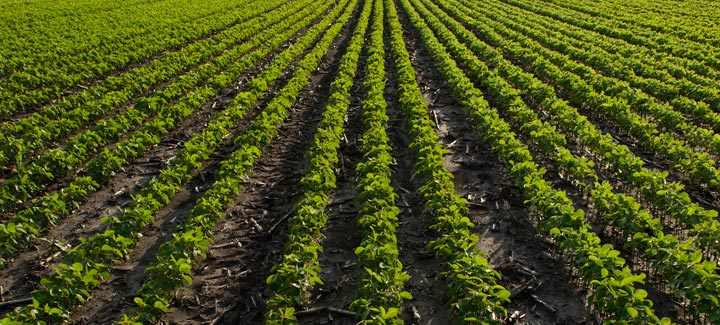
Looking for a better return on investment for your soybean acres? Narrow-row planting may be the answer. Research from the Systematic Optimization of Yield-enhancing Applications (SOYA) study, otherwise known as the “updated Kitchen Sink” project, shows true yield advantages in planting soybeans in narrower rows. This conclusion supports Stine’s philosophy that there are gains to be had in both corn and soybeans by moving to narrow rows.
For the study, researchers pulled data from nine states — Arkansas, Illinois, Indiana, Iowa, Kansas, Kentucky, Michigan, Minnesota and Wisconsin — and tested high-input soybean production from 2012 through 2014, specifically focusing on management practices and inputs that have the most impact on soybean yields. Results from 2013 and 2014 confirmed clear yield advantages to planting in narrow rows versus the more common 30-inch row spacing. In fact, yield boosts of three bushels per acre were seen in rows narrower than 30 inches, and even greater yields came from ultra-narrow rows of seven to 10 inches.
The SOYA research also found that management practices, rather than inputs, are key to driving higher yields. Seed treatments, fungicide, herbicide and fertilizer choices are important to any field, but understanding how and when to make applications and choosing the right product for your field conditions are the practices that will ultimately help drive that extra yield.
While the results favor a move toward narrow-row soybeans, it’s important to remember that you need the right variety for narrow-row planting. For help choosing the right variety for the right environment and field conditions, contact your Stine regional sales agronomist.